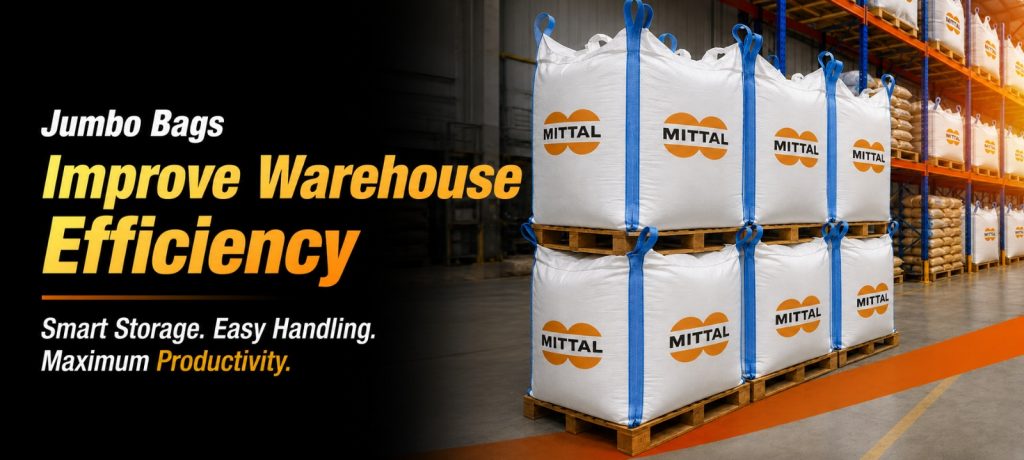

FIBC bags, also known as Jumbo Bags or Bulk Bags, are widely used to store and transport materials such as grains, cement, plastic granules, minerals, chemicals, and other bulk products. They help businesses handle large quantities of material with fewer packaging units.
However, handling these bags requires care. A damaged lifting loop, an unsuitable forklift attachment, or an overloaded bag can create serious safety risks for workers and damage the stored material.
Following the correct safety procedures before lifting, moving, filling, or emptying an FIBC bag can help prevent workplace accidents and material loss.
Mittal Technopack Pvt. Ltd., an Indian manufacturer and exporter of FIBC bags with a history dating back to 1985, serves customers across international markets. The company offers different bag designs for varied industrial requirements, making it important for buyers and users to select the right bag and follow proper handling practices.
10 important safety precautions to follow when handling FIBC bags.
1. Check the Bag Before Every Use

Before lifting or filling an FIBC bag, inspect it carefully. Even a small tear or damaged lifting loop can become a serious problem when the bag contains a heavy load.
Pay attention to the following areas:
- Fabric: Check for cuts, holes, tears, or damaged seams.
- Lifting loops: Look for fraying, stitching damage, or visible wear.
- Bottom discharge: Ensure the outlet and its closure are in good condition.
- Top filling area: Check for damage around the filling spout or opening.
- Contamination: Make sure the bag is suitable for the material being packed.
Never use a bag with visible structural damage. Remove it from service and follow your company’s inspection procedure.
2. Never Exceed the Safe Working Load (SWL)
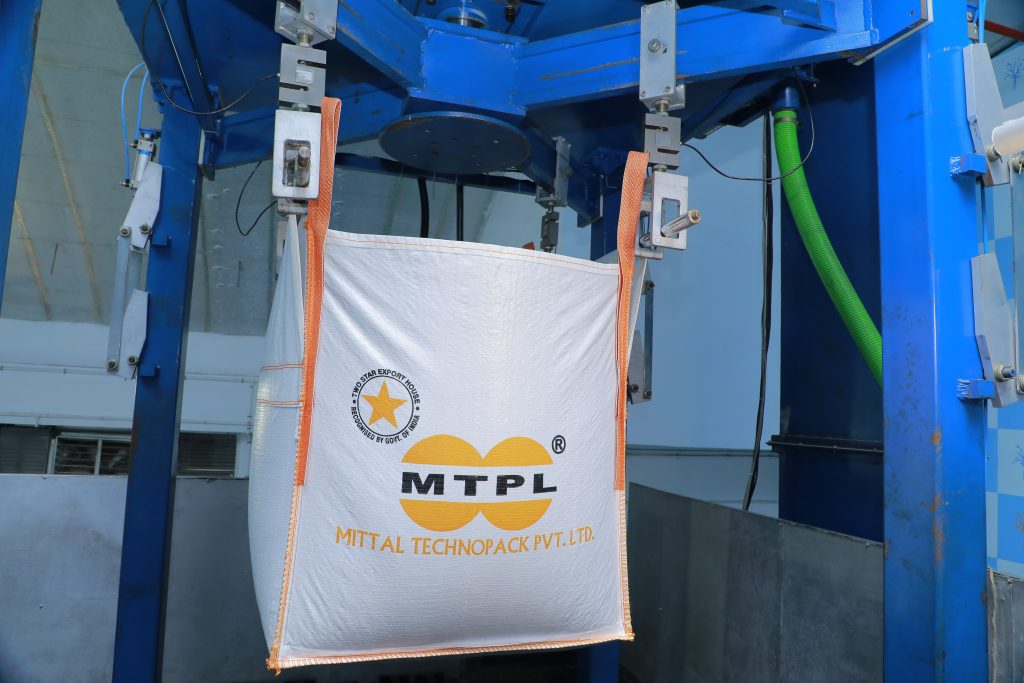
Every FIBC bag is designed to carry a specified maximum load, known as its Safe Working Load (SWL). Exceeding this limit can damage the fabric, seams, or lifting loops.
Before filling a bag, check its label and technical specifications. Make sure the weight of the material stays within the permitted limit.
For example, if a bag is rated for 1,000 kg, filling it with 1,200 kg is unsafe, even if the bag appears strong enough.
Also consider the material’s density. Two products may occupy the same volume but have very different weights.
Safety tip: Do not judge a bag’s capacity by its size or appearance. Always follow the specified SWL and any applicable handling instructions.
3. Use the Correct Forklift or Lifting Equipment

FIBC bags are often moved using forklifts, cranes, or other suitable lifting equipment. The equipment must be appropriate for the bag design, load weight, and lifting method.
When using a forklift:
- Ensure the forks have sufficient capacity for the loaded bag.
- Position the lifting loops correctly on the forks or use an approved lifting attachment.
- Keep the loops free from sharp edges that could cut or damage them.
- Avoid using improvised hooks or attachments.
- Check that the load is stable before moving.
Never lift a bag by inserting the forks under the bag fabric itself unless the bag and handling system are specifically designed for that method.
Operators should be trained to handle bulk bags safely and follow the equipment manufacturer’s instructions.
4. Lift the Bag Using All Designed Lifting Loops
Lifting loops are designed to distribute the load when used as specified by the bag manufacturer. Using the wrong number of loops can place excessive stress on individual loops and seams.
Before lifting, confirm that each required loop is correctly positioned and supported.
Keep these points in mind:
- Use the lifting points specified in the bag’s instructions.
- Ensure the loops are not twisted or trapped.
- Lift the bag vertically and smoothly.
- Do not pull the bag sideways while it is suspended.
- Never stand underneath a suspended FIBC bag.
If a loop is damaged or does not sit correctly on the lifting equipment, stop the operation and inspect the bag before proceeding.
5. Keep Workers Away from Suspended Bags
A loaded FIBC bag can weigh hundreds or even thousands of kilograms. If it falls, the consequences can be severe.
The area beneath a suspended bag must remain clear. Workers should never walk under a lifted bag or attempt to steady it by standing close to its load path.
During lifting and movement:
- Keep unauthorised people outside the operating area.
- Use clear signals between the operator and ground staff.
- Move the load slowly and avoid sudden stops.
- Do not allow workers to stand between a suspended bag and a fixed structure.
- Lower the bag to a stable surface before making adjustments.
A clearly marked handling zone can help workers understand where they should and should not stand.
6. Choose the Right FIBC Bag for the Material
Not every FIBC bag is suitable for every product. The material, packaging environment, storage conditions, and potential hazards all influence the correct bag selection.
For example, food ingredients may require suitable food-contact packaging and appropriate hygiene controls. Fine powders may need a liner or a specific filling and discharge arrangement.
Materials that create a flammable dust atmosphere may also require special consideration of static electricity.
Mittal Technopack offers different FIBC designs, including circular bags, baffle bags, container bags, loop bags, and Type-C bags. Buyers should confirm the exact specifications required for their application before selecting a bag.
For materials that may create an ignition hazard, do not assume that a standard FIBC bag provides electrostatic protection. Consult a qualified safety professional and select a bag suitable for the material and operating environment.
7. Take Precautions Against Static Electricity
Static electricity can develop during the filling, emptying, or movement of bulk materials. This becomes particularly important when handling combustible powders, flammable vapours, or materials in environments where an ignition could cause a fire or explosion.
The correct precautions depend on the material and workplace conditions.
Important measures include:
- Assess whether the material can create a combustible dust or flammable atmosphere.
- Select the appropriate FIBC type for the identified risk.
- Use Type-C bags only with the required grounding arrangements and verified procedures.
- Do not use Type-C bags if their conductive elements or grounding arrangements cannot be verified.
- Consider Type-D bags where suitable, following the manufacturer’s instructions and a proper risk assessment.
- Follow site-specific controls for ignition sources and static discharge.
Type-A bags provide no specific electrostatic protection, while Type-B bags offer limited protection against certain high-energy discharges. Neither should automatically be treated as suitable for a flammable atmosphere.
Important: Bag selection alone does not guarantee safety. The complete filling or discharge operation must be assessed for electrostatic and fire risks.
8. Place the Bag on a Stable and Suitable Surface
Where and how a filled FIBC bag is placed can affect its stability. An uneven floor, a damaged pallet, or an unsuitable stacking arrangement can cause a bag to lean or fall.
Before placing the bag, check that the surface is level, strong enough to support the load, and free from obstructions.
Follow these precautions:
- Use suitable pallets or platforms when required.
- Keep bags away from edges where they could fall.
- Do not place filled bags on damaged pallets.
- Avoid stacking bags unless the bag design, load, and storage arrangement permit it.
- Follow the manufacturer’s stacking recommendations.
- Keep storage areas organised and accessible.
When stacking is permitted, ensure the lower bags can safely support the loads above them. Never assume that all FIBC bags are designed for stacking.
9. Follow Safe Filling and Discharge Procedures
Filling and emptying an FIBC bag require attention because the material can shift, spill, or create dust. Poorly controlled discharge can also cause the bag to become unstable.
During filling, make sure the bag is correctly positioned and supported. Do not exceed its SWL, and use suitable equipment to control dust where necessary.
During discharge:
- Secure the bag according to the equipment and bag instructions.
- Keep workers clear of the discharge outlet and the material flow.
- Open discharge spouts carefully and only when the bag is properly supported.
- Never stand underneath a bag while releasing material.
- Do not attempt to clear a blocked outlet by standing beneath or climbing onto a suspended bag.
- Follow lockout and isolation procedures before clearing blockages where machinery is involved.
Some materials can flow suddenly or form unstable masses. Workers should understand the specific risks of the product they are handling before starting the operation.
10. Train Workers and Store Unused Bags Properly
Even a well-manufactured FIBC bag can be handled incorrectly. Workers need clear instructions on inspection, lifting, filling, discharge, storage, and emergency procedures.
Training should cover the bag’s SWL, the correct lifting method, forklift safety, static electricity risks, and what to do if a bag becomes damaged.
Unused bags also need proper storage. Keep them in a clean, dry, protected area and follow the supplier’s storage recommendations. Protect them from sharp objects, unnecessary abrasion, and prolonged exposure to sunlight or other conditions that may damage the fabric.
For applications involving food products, maintain suitable hygiene controls and prevent contact with contaminants.
Regular training and consistent inspection procedures can help reduce avoidable accidents and improve day-to-day handling.
Why FIBC Bag Quality and Proper Handling Matter
Safe handling begins before a bag reaches the warehouse. The bag’s construction, material, lifting design, load rating, and intended application all affect how safely it can be used.
Mittal Technopack Pvt. Ltd. brings experience dating back to 1985 in the woven packaging and FIBC industry. According to its official website, the company supplies a range of FIBC bag designs and maintains quality-control processes that include load testing, strength testing, GSM testing, and accelerated weathering tests.
The company also has a food-grade manufacturing facility with BRCGS certification, supporting relevant packaging requirements where applicable.
However, even a bag manufactured under quality-control procedures must be selected correctly, inspected before use, and handled according to its specifications. Good packaging and safe workplace practices must work together.
Final Checklist Before Handling an FIBC Bag
Before moving a filled bag, take a moment to check these essentials:
- The bag has no visible damage.
- The load is within the specified SWL.
- The lifting loops and equipment are correctly positioned.
- The forklift or lifting equipment has adequate capacity.
- The area beneath and around the bag is clear.
- The bag is suitable for the material being handled.
- Electrostatic risks have been assessed where necessary.
- The destination surface is stable and suitable.
- Filling or discharge procedures are being followed.
- The operator and ground staff understand their responsibilities.
A few minutes spent checking these points can help prevent injuries, material loss, and unnecessary downtime.
FAQs
1. What is the most important safety precaution when handling FIBC bags?
Never exceed the bag’s specified Safe Working Load, and inspect its fabric, seams, and lifting loops before use. Also ensure that suitable lifting equipment and safe operating procedures are in place.
2. Can FIBC bags be reused?
Some FIBC bags are designed for multiple trips, while others are intended for single use. Reuse depends on the bag’s design, condition, intended application, and manufacturer instructions. Never reuse a bag that is damaged or unsuitable for the next load.
3. Can a forklift lift any type of FIBC bag?
No. The forklift, forks, or attachment must be suitable for the bag’s lifting design and the total load. Follow the bag manufacturer’s instructions and the equipment operator’s safety procedures.
4. Why is grounding important for Type-C FIBC bags?
Type-C bags use conductive elements intended to dissipate static electricity when correctly grounded. Their safe use depends on suitable grounding, verified conductive continuity, and procedures appropriate for the material and environment.
5. How should FIBC bags be stored?
Store unused bags in a clean, dry, protected area according to the manufacturer’s recommendations. Filled bags should be placed on stable surfaces, with stacking allowed only where the bag design and storage conditions permit it.
Looking for the Right FIBC Packaging Solution?
Selecting the right FIBC bag is an important step in improving packaging efficiency and safe material handling. Consider your product, load weight, filling and discharge method, storage conditions, and any special requirements before placing an order.
Mittal Technopack Pvt. Ltd. manufactures and exports FIBC bags for a range of industrial and commercial applications. Visit www.mittaltechnopack.com to explore its product range or contact the company to discuss your packaging requirements.