Polypropylene (PP) is one of the most widely used thermoplastics in modern manufacturing. Known for its durability, flexibility, and resistance to chemicals, polypropylene is used in packaging, automotive components, consumer goods, and industrial products. One of the most important properties that makes this material so versatile is its melting point. Understanding the melting point of polypropylene helps manufacturers process the material efficiently and maintain product quality.
In this guide by Mittal Technopack, we will explore the melting temperature of polypropylene, the factors that influence it, and why it is important for industrial applications.
What is Polypropylene?
Polypropylene is a thermoplastic polymer, meaning it softens when heated and hardens again when cooled. This property allows it to be molded into different shapes through processes such as:
- Injection molding
- Blow molding
- Extrusion
- Thermoforming
Because polypropylene can be melted and reshaped multiple times without significant degradation, it is widely used in manufacturing and packaging industries.
What is the Melting Point of Polypropylene?
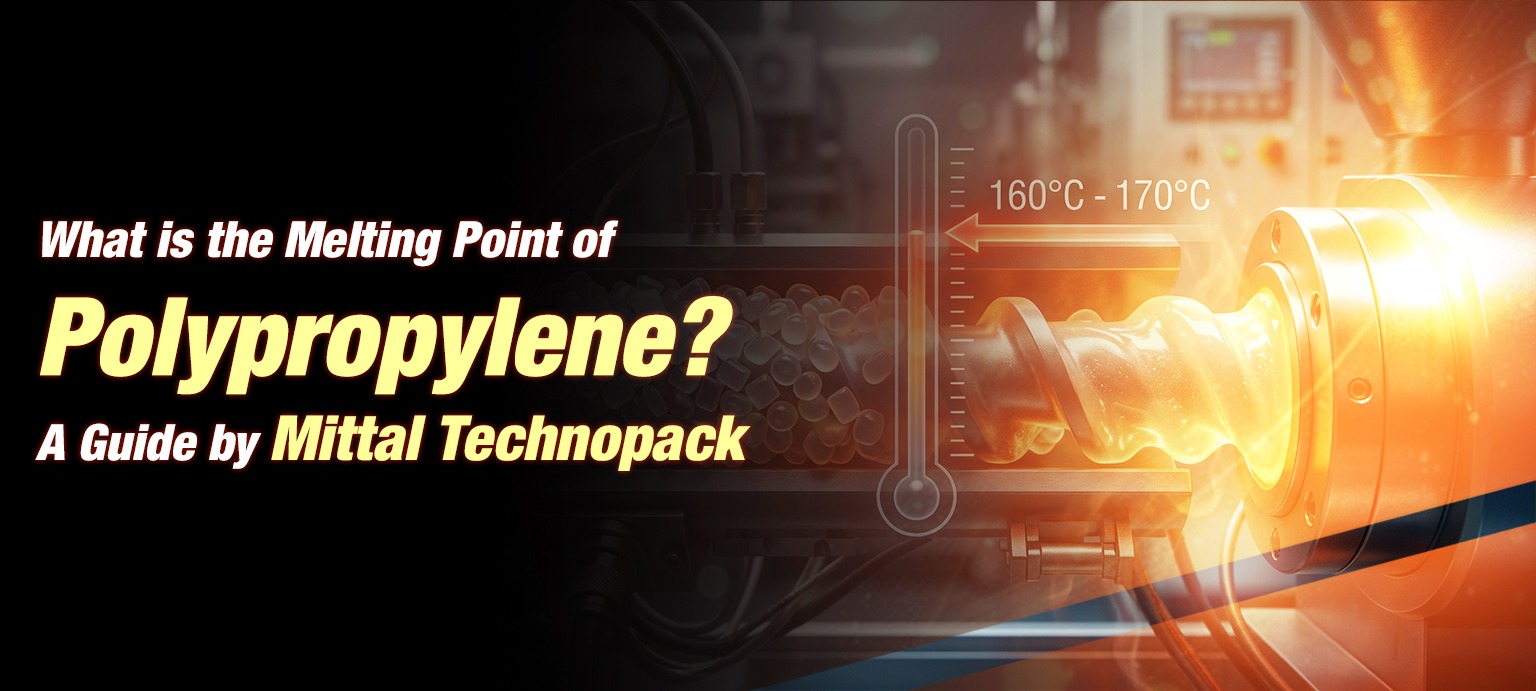
The melting point of polypropylene typically ranges between 160°C and 170°C (320°F to 338°F).
At this temperature range, polypropylene transitions from a solid state to a liquid form, allowing it to be processed and molded into various shapes.
However, the exact melting temperature may vary depending on several factors such as:
- The grade of polypropylene
- Additives used during manufacturing
- The level of crystallinity in the material
This melting point is relatively high compared to many other plastics, which is one reason polypropylene is preferred in applications requiring heat resistance and durability.
Why the Melting Point of Polypropylene is Important
Understanding the melting point of polypropylene is critical for manufacturers because it directly affects the processing and performance of the material.
- Efficient Manufacturing: Industrial processes such as injection molding require precise temperature control. If the temperature is too low, polypropylene will not melt properly. If it is too high, it may degrade.
- Product Durability: Products made from polypropylene maintain their structural strength even at moderately high temperatures due to their high melting point.
- Heat Resistance: Polypropylene withstands higher temperatures than many other plastics, making it suitable for packaging, containers, and industrial applications.
Factors That Affect the Melting Point of Polypropylene
Although polypropylene generally melts between 160°C and 170°C, several factors can influence its melting behavior.
1. Polymer Structure
Polypropylene can exist in different structural forms such as isotactic, syndiotactic, and atactic. Among these, isotactic polypropylene has the highest crystallinity and therefore a higher melting point.
2. Additives and Fillers
Manufacturers often add stabilizers, colorants, or reinforcing fillers to enhance the material’s properties. These additives can slightly modify the melting temperature.
3. Crystallinity
Higher crystallinity means stronger molecular bonding within the polymer structure. This usually results in a higher melting temperature and improved mechanical strength.
4. Processing Conditions
The way polypropylene is processed during manufacturing can influence its final thermal properties.
Polypropylene vs Other Plastics: Melting Point Comparison
To better understand polypropylene’s thermal performance, it helps to compare it with other common plastics.
| Plastic Material | Approximate Melting Point |
| Polyethylene (PE) | 120–130°C |
| Polypropylene (PP) | 160–170°C |
| Polystyrene (PS) | Around 240°C (softening temperature lower) |
| PVC | 100–260°C depending on formulation |
From this comparison, it is clear that polypropylene offers a good balance between heat resistance and processability, which is why it is commonly used in packaging and industrial manufacturing.
Industrial Applications of Polypropylene
Due to its favorable melting point and strong mechanical properties, polypropylene is used in a wide range of applications, including:
- Packaging containers
- Plastic caps and closures
- Food-grade storage products
- Automotive components
- Household plastic items
- Industrial packaging solutions
Manufacturers rely on polypropylene because it can maintain structural integrity while being easy to mold and shape.
Advantages of Polypropylene in Packaging
For companies specializing in plastic packaging solutions, polypropylene offers several advantages:
- High heat resistance
- Excellent chemical resistance
- Lightweight yet strong structure
- Recyclability and sustainability
- Cost-effective production
These benefits make polypropylene an ideal material for modern packaging and industrial uses.
Conclusion
The melting point of polypropylene typically ranges from 160°C to 170°C, making it a durable and heat-resistant thermoplastic suitable for a wide range of manufacturing applications. Its thermal stability, combined with flexibility and chemical resistance, makes it one of the most widely used plastics worldwide.
At Mittal Technopack, understanding material properties such as melting temperature helps ensure the production of high-quality plastic packaging solutions that meet industry standards and customer expectations.