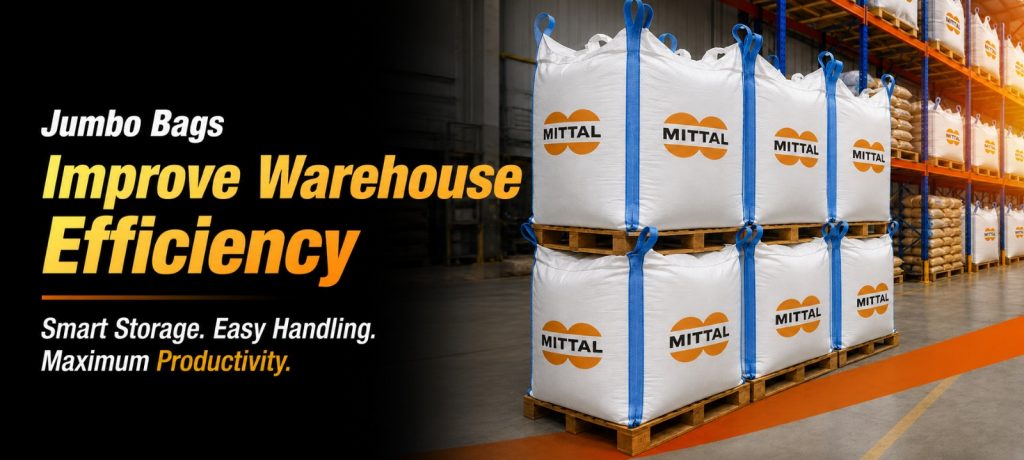

The agricultural industry relies heavily on safe, efficient, and cost-effective packaging solutions to store and transport a wide range of materials, from grains and seeds to fertilisers and agrochemicals. Among the most trusted packaging solutions globally, FIBC (Flexible Intermediate Bulk Container) bags stand out for their durability, versatility, and ease of handling.
Here, we delve into the crucial role of FIBC bags in the agricultural industry and highlight their impact on optimising operations and safeguarding agricultural products. As one of the trailblazers in the woven sacks and FIBC manufacturing sector, industry-leading companies like us have transformed agricultural logistics with world-class bulk bag solutions.
Top Roles of FIBC Bags in the Agricultural Sector
- Efficient Storage: FIBC bags provide a cost-effective and space-efficient solution for storing agricultural commodities in large quantities. The design allows for easy stacking, optimizing storage space in warehouses and other storage facilities.
- Safe Transportation: FIBC bags are designed to withstand the rigors of transportation, protecting agricultural products from damage during transit. The sturdy construction and robust material ensure that crops, grains, seeds, and other commodities reach their destination safely.
- Moisture Protection: FIBC bags can be manufactured with moisture-resistant materials or liners, preventing moisture absorption and safeguarding agricultural products from spoilage caused by excessive humidity or wet conditions.
- Contamination Prevention: FIBC bags act as a barrier against contaminants such as dust, insects, and pests. The tightly woven construction and optional liners help maintain the quality and purity of the agricultural commodities, ensuring they remain uncontaminated.
- UV Protection: FIBC bags can be UV-stabilized, providing protection against harmful ultraviolet rays. This feature is particularly beneficial for agricultural products stored or transported in open spaces, protecting them from sun damage.
- Easy Handling: FIBC bags are designed with lifting loops or straps, facilitating easy handling with forklifts or cranes. This enables efficient loading and unloading processes, saving time and labor during agricultural operations.
- Customizable Options: FIBC bags can be customized to meet specific requirements. Additional features such as spouts, discharge openings, and closures can be incorporated, allowing for controlled dispensing and convenient access to the stored products.
- Reusability: FIBC bags are highly durable and can be reused multiple times, reducing the need for frequent replacements. This reusability feature not only saves costs but also contributes to sustainable agricultural practices by minimizing waste generation.
- Environmental Friendliness: The reusable nature and reduced reliance on single-use packaging materials contribute to a greener agricultural sector.
- Cost-effectiveness: By using FIBC bags, farmers and agricultural businesses can benefit from cost savings in terms of storage, transportation, and packaging. The efficiency, durability, and reusability of FIBC bags make them a cost-effective choice for the agricultural sector.
What Makes FIBC Bags Ideal for Agriculture?
Agriculture demands packaging that is strong, weather-resistant, food-safe, and economical. FIBC bags meet all these requirements with ease.
- High Strength & Durability : FIBC bags are made of premium woven polypropylene fabric engineered to handle heavy loads ranging from 500 kg to 2000 kg. This ensures safe transportation of bulk agricultural goods without leakage or damage.
- Cost-Effective Bulk Handling: Instead of using multiple small sacks, farmers and suppliers prefer bulk bags that reduce packaging cost, handling time, and storage space.
- Easy Storage & Transportation:
FIBCs are designed for:
- Forklift lifting
- Crane handling
- Stacking in warehouses
- Efficient container loading
This makes them highly suitable for modern agricultural supply chains.
4. Customizable for Various Agro Products
Bulk FIBC bags can be tailored for:
- Food grains (rice, wheat, lentils, cereals)
- Seeds
- Fertilizers
- Cattle feed
- Agro-chemicals (powders & granules)
- Soil, compost & organic manure
Types of FIBC Bags Used in Agriculture
Agricultural products require different handling properties depending on weight, flowability, and moisture sensitivity. Some popular variants include:
- Standard FIBC Bags-Used widely for grains, fertilizers, feed, etc.
- Food Grade FIBC Bags – Manufactured in BRCGs-certified food-safe facilities to prevent contamination—ideal for edible agricultural goods.
- Conductive / Type-C FIBC Bags– Used for fertilizer powders that may develop static charge.
- Ventilated FIBC Bags– Perfect for potatoes, onions, and produce requiring air circulation.
- Baffle FIBC Bags-Maintain shape and maximize space during transport.
- U-Panel & Circular Bags– Designed for enhanced strength and stability.
Conclusion:
FIBC bags play a crucial role in the agricultural sector by offering efficient storage, safe transportation, protection against moisture & contaminants and easy handling. Their reusability and environmental friendliness contribute to sustainable practices while also providing cost savings. By utilizing FIBC bags, farmers and businesses can optimize their operations and ensure the quality and integrity of their agricultural products.